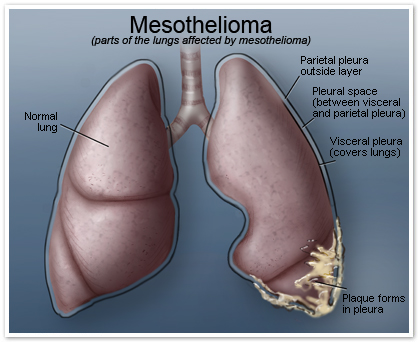
Mesothelioma is a rare type of cancer that primarily affects the lining of the lungs, but can also affect the heart, abdomen and other organs. Approximately
2,000 to 3,000 cases of mesothelioma cancer are diagnosed each year in the United States, comprising around . 3 percent of all cancer diagnoses. The average age at diagnosis is 62 years of age, occurs about four times more frequently in men than in women and is almost always caused by exposure to
asbestos.
The life expectancy for mesothelioma patients is generally reported as less than one year following diagnosis, however, a patient's prognosis can be positively affected by numerous factors including how early the cancer is diagnosed and how aggressively the disease is treated.
Mesothelioma Types
Pleural Mesothelioma:
Developing in the lining of the lungs, pleural mesothelioma is the most common form of the disease. Approximately 75 percent of cases involve the pleura.
Peritoneal Mesothelioma :
Developing in the lining of the abdominal cavity, peritoneal mesothelioma represents about 10 to 20 percent of all mesothelioma cases.
Pericardial Mesothelioma :
Representing about 1 percent of mesothelioma cases, pericardial mesothelioma is a very rare form of the cancer that develops in the lining of the heart.
Causes of Mesothelioma :
Exposure to asbestos is the leading cause of mesothelioma cancer. Exposure can occur by either inhaling or ingesting asbestos fibers, which typically become airborne after asbestos-containing products have been damaged.
When these microscopic fibers are inhaled, they can become lodged in the lining of the lungs and cause pleural mesothelioma. When ingested, the fibers can become lodged in the lining of the abdomen and lead to peritoneal mesothelioma.
Common Mesothelioma Symptoms:
Shortness of breath (dyspnea)
Chest pain
Reduced chest expansion
Abdominal pain
Abdominal enlargement and tenderness
Pleural effusions
Barely audible or harsh breathing sounds
Dry cough or wheezing
Weight loss
Ascites (fluid buildup in the peritoneal cavity)
Loss of appetite
Mesothelioma Diagnosis :
To diagnose mesothelioma, see the following imaging scans:
CT Scans MRI PET Scans X-Rays
Mesothelioma Biopsies
In addition to imaging scans, doctors may also request a surgical biopsy, a procedure where a small piece of tissue is removed and analyzed to determine if mesothelioma is present. While biopsies can be risky for some patients, they are widely considered by most doctors to be the most accurate way to determine if a patient has mesothelioma.
Treating Mesothelioma
Treatment options will depend on a number of factors,it includes :
1) Type of mesothelioma you are diagnosed with,
2) The stage of your cancer,
3) your age and overall physical health.
Three of the most commonly used treatments for mesothelioma include
surgery, chemotherapy and
radiation therapy.
Emerging Treatment Options
One of the more successful and emergent treatment options is known as
multimodal therapy, which involves a combination of two or more treatments. This method of treatment may involve
surgery, chemotherapy, radiation therapy or any other alternative treatment option.